


Loans are a common part of personal and business finance. People borrow money for many reasons, including buying homes, paying for education, consolidating debt, expanding businesses, or covering emergency expenses. However, not all loans work the same way. One of the most important distinctions borrowers should understand is the difference between secured and unsecured loans.
Choosing the wrong type of loan can lead to higher costs, unnecessary risks, or financial strain. Understanding how secured and unsecured loans operate can help borrowers make smarter financial decisions and select the financing option that best fits their needs.
This guide explains the key differences, advantages, disadvantages, risks, and ideal uses of secured and unsecured loans.
What Is a Secured Loan?
A secured loan is backed by collateral. Collateral is an asset the borrower pledges to the lender as security for the loan.
If the borrower fails to repay the loan, the lender has the legal right to seize the collateral to recover losses.
Common examples of collateral include:
- Homes
- Vehicles
- Savings accounts
- Investments
- Equipment
- Real estate
Because lenders face less risk with secured loans, these loans often come with lower interest rates and higher borrowing limits.
Common Types of Secured Loans
Several well-known financial products fall into the secured loan category.
Mortgage Loans
A mortgage uses the home itself as collateral. If the borrower stops making payments, the lender can begin foreclosure proceedings.
Auto Loans
Vehicle loans are secured by the car being financed. Failure to repay may result in repossession.
Home Equity Loans
These loans allow homeowners to borrow against the equity in their property.
Secured Business Loans
Businesses often use equipment, inventory, or property as collateral for financing.
Secured Credit Cards
These cards require a refundable security deposit, making them useful for building or rebuilding credit.
What Is an Unsecured Loan?
An unsecured loan does not require collateral. Instead, lenders approve borrowers based on factors such as:
- Credit score
- Income
- Employment history
- Debt-to-income ratio
- Financial history
Since lenders take on more risk with unsecured loans, these loans often carry higher interest rates and stricter approval requirements.
Common Types of Unsecured Loans
Personal Loans
Many personal loans are unsecured and can be used for various purposes.
Credit Cards
Most credit cards are unsecured revolving credit accounts.
Student Loans
Federal student loans are generally unsecured.
Medical Loans
Some healthcare financing options are unsecured.
Signature Loans
These loans rely solely on the borrower’s promise to repay.
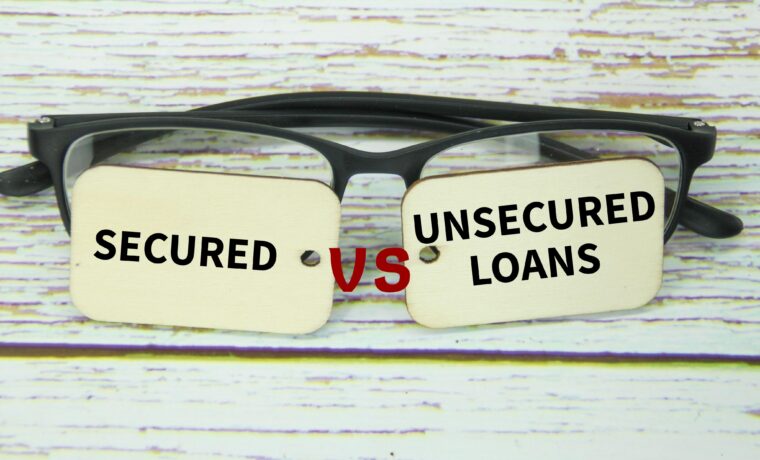
The Core Difference Between Secured and Unsecured Loans
The primary difference comes down to collateral.
Secured Loans
- Require collateral
- Lower lender risk
- Lower interest rates
- Easier qualification for some borrowers
- Risk of losing pledged assets
Unsecured Loans
- No collateral required
- Higher lender risk
- Higher interest rates
- Stronger credit usually required
- No direct asset seizure
Understanding this distinction is critical before applying for financing.
How Interest Rates Differ
Interest rates are one of the biggest differences between these loan types.
Because secured loans reduce lender risk, they generally offer lower rates.
For example:
- Mortgage loans often have relatively low rates
- Auto loans usually cost less than personal loans
- Secured business loans often have favorable terms
Unsecured loans typically cost more because lenders cannot recover losses through collateral as easily.
Understanding Loan Interest Costs
I = P \times r \times t
Even a small difference in interest rates can significantly affect total repayment costs over time.
Advantages of Secured Loans
Secured loans provide several benefits for borrowers.
Lower Interest Rates
Collateral reduces lender risk, leading to more affordable borrowing costs.
Higher Borrowing Limits
Lenders are often willing to approve larger amounts when assets secure the loan.
Easier Approval
Borrowers with lower credit scores may still qualify if they provide valuable collateral.
Longer Repayment Terms
Secured loans often come with extended repayment periods, reducing monthly payments.
Opportunity to Build Credit
Responsible repayment can improve credit history over time.
Disadvantages of Secured Loans
Despite their advantages, secured loans also carry important risks.
Risk of Losing Assets
Defaulting on payments can result in foreclosure, repossession, or asset seizure.
Longer Approval Process
Lenders may require asset appraisals, inspections, or title verification.
Potential Overborrowing
Higher borrowing limits can tempt borrowers to take on more debt than necessary.
Reduced Financial Flexibility
Pledged assets may be tied up until the loan is fully repaid.
Advantages of Unsecured Loans
Unsecured loans also offer meaningful benefits.
No Collateral Required
Borrowers do not risk losing personal property directly through loan default.
Faster Approval Process
Many unsecured loans have simplified applications and quick funding.
Flexible Use
Personal loans can often be used for multiple purposes.
Less Documentation
Without collateral evaluation, paperwork requirements may be reduced.
Useful for Short-Term Financing
Unsecured loans may work well for smaller or temporary financial needs.
Disadvantages of Unsecured Loans
These loans also have limitations borrowers should understand.
Higher Interest Rates
Lenders charge more to offset increased risk.
Lower Borrowing Limits
Approval amounts may be smaller compared to secured loans.
Tougher Qualification Standards
Good credit and stable income are often required.
Greater Impact on Credit Scores
Missed payments can quickly damage credit history.
More Aggressive Collections
Although lenders cannot seize collateral directly, unpaid unsecured debt may still lead to lawsuits or wage garnishment.
Which Loan Type Is Easier to Qualify For?
The answer depends on the borrower’s financial situation.
Secured Loans May Be Easier If:
- You have lower credit scores
- You own valuable assets
- You need larger loan amounts
- You want lower rates
Unsecured Loans May Be Easier If:
- You have excellent credit
- You need smaller amounts
- You want fast approval
- You do not want to risk assets
Lenders evaluate both creditworthiness and risk exposure before approving any loan.
How Credit Scores Affect Both Loan Types
Credit scores matter for both secured and unsecured loans, although the impact may differ.
For Secured Loans
Credit scores still influence:
- Interest rates
- Loan terms
- Approval speed
However, collateral may compensate for weaker credit in some cases.
For Unsecured Loans
Credit scores play a much larger role because lenders rely entirely on borrower reliability.
Higher credit scores generally lead to:
- Better rates
- Higher limits
- Faster approvals
- More lender options
When a Secured Loan Makes Sense
A secured loan may be the better option in situations such as:
- Buying a home
- Purchasing a vehicle
- Financing major business investments
- Borrowing large amounts
- Seeking lower interest costs
Borrowers comfortable pledging assets may benefit significantly from secured financing.
When an Unsecured Loan Makes Sense
An unsecured loan may be ideal when:
- You need quick access to funds
- You lack valuable collateral
- You want to avoid risking assets
- You need a smaller loan
- You have strong credit
These loans often work well for debt consolidation, medical expenses, or emergency costs.
Risks Borrowers Should Understand
Every loan involves financial responsibility and potential risk.
Risks of Secured Loans
- Asset loss
- Foreclosure
- Repossession
- Long-term debt obligations
Risks of Unsecured Loans
- Higher repayment costs
- Credit score damage
- Collection actions
- Legal consequences for nonpayment
Borrowers should carefully evaluate repayment ability before accepting any loan.
How Lenders Evaluate Loan Applications
Whether secured or unsecured, lenders typically examine:
- Income stability
- Employment history
- Existing debt
- Credit reports
- Loan purpose
- Financial reserves
For secured loans, lenders also review:
- Collateral value
- Ownership verification
- Asset condition
Preparation improves approval chances regardless of loan type.
Tips for Choosing the Right Loan
Choosing the right financing option requires careful consideration.
Compare Interest Rates
Even small rate differences matter over time.
Review Loan Terms Carefully
Understand fees, repayment schedules, and penalties.
Borrow Only What You Need
Avoid taking on unnecessary debt.
Assess Financial Stability
Consider whether payments fit comfortably within your budget.
Understand the Risks
Know what could happen if repayment becomes difficult.
Check Multiple Lenders
Comparing offers helps identify the most favorable terms.
The Importance of Responsible Borrowing
Loans can be valuable financial tools when used wisely. However, borrowing without a clear repayment strategy can create long-term financial stress.
Responsible borrowing includes:
- Making payments on time
- Avoiding excessive debt
- Maintaining emergency savings
- Monitoring credit health
- Borrowing within realistic limits
Strong financial habits reduce the likelihood of future financial problems.
Final Thoughts
Secured and unsecured loans each serve important purposes in personal and business finance. The right choice depends on your financial goals, credit profile, risk tolerance, and borrowing needs.
Secured loans often provide lower rates and larger borrowing limits but come with the risk of losing valuable assets. Unsecured loans offer greater flexibility and no collateral requirements but usually carry higher costs and stricter approval standards.
Understanding how both loan types work allows borrowers to make informed decisions, avoid unnecessary risks, and choose financing solutions that support long-term financial stability.
Frequently Asked Questions
1. Can a secured loan help improve bad credit?
Yes. Making on-time payments on a secured loan can help rebuild credit over time, especially when reported to credit bureaus.
2. Are mortgage loans always secured loans?
Yes. Mortgage loans are secured by the property being financed.
3. What happens if I default on an unsecured loan?
Lenders may send accounts to collections, file lawsuits, or pursue wage garnishment depending on local laws and the loan agreement.
4. Do unsecured loans require proof of income?
Yes. Most lenders require proof of income to verify repayment ability.
5. Which loan type usually has faster approval?
Unsecured loans often have quicker approval processes because they do not require collateral evaluation.
6. Can I switch a secured loan into an unsecured loan later?
In some cases, refinancing may allow borrowers to replace a secured loan with unsecured financing, depending on eligibility.
7. Is collateral always physical property?
No. Collateral can include financial assets such as savings accounts, investments, or certificates of deposit in some loan arrangements.